

As the end of 2026 draws closer, it is interesting to look back at the conversations we have been having with candidates throughout the year across the HR and Comms function. While I do not think many of the core priorities have changed, economic uncertainty and market conditions have influenced the focus on what matters when people are looking for their next role.

After returning to New Zealand from the UK, I was fortunate to secure a Strategic Advisor role at Te Kawa Mataaho Public Service Commission, where I worked closely with Chief Executives and senior Public Service leaders on executive appointments, leadership development and succession planning. I genuinely enjoyed the work, the people and the opportunity to contribute to leadership across the Public Service. However, when the opportunity came about to help grow and elevate IN SIDE Recruitment's Executive Search and Leadership practice across both the public and private sectors, it felt like too good an opportunity to pass up. So, after six months in the role (and a trip back to the UK to catch up with family), I've been reflecting on the experience and what it's been like being back on the consulting side of the table, and I thought I'd share some of my thoughts on the journey to date.

100 Wellington based businesses donating at least $1,000 NZD will make up more than a third of fundraising efforts for 2026
I've spent 25 years recruiting contractors across Wellington's public sector, and if there's one thing I've learned, it's that the end of the financial year can make even the most experienced contractors feel unsettled. Every year I have conversations with contractors who are wondering whether their contract will be extended, whether new opportunities will emerge in July and through the election cycle, or whether they should be making a move. This year feels a little different to the last couple. After a quieter period through 2024 and into early 2025, we’ve seen a return to a more active contracting market. Opportunities have been there, agencies have been engaging contractors, and some confidence has returned. That said, we are now travelling into a period that naturally creates a degree of uncertainty. Agencies are working through budgets, planning for the year ahead, and navigating an election year, there is a lot happening behind the scenes. Add school holidays, winter bugs, and people taking a well-earned break, and it's easy to see why July can feel like a quieter market than the months that came before it. So, a couple of questions I’ve been fielding and thought merit in sharing more widely. What should you do if you find yourself available? And what if you’re offered an extension over the months ahead? If you find yourself available? July is usually a quieter month, and it’s important to be realistic about that. In contracting, gaps between roles happen. This isn't a reflection on your capability, your reputation, or your value in the market. It's simply part of the trade-off that comes with the flexibility and rewards of contracting. So, if you find yourself between roles, these are the things I would suggest.
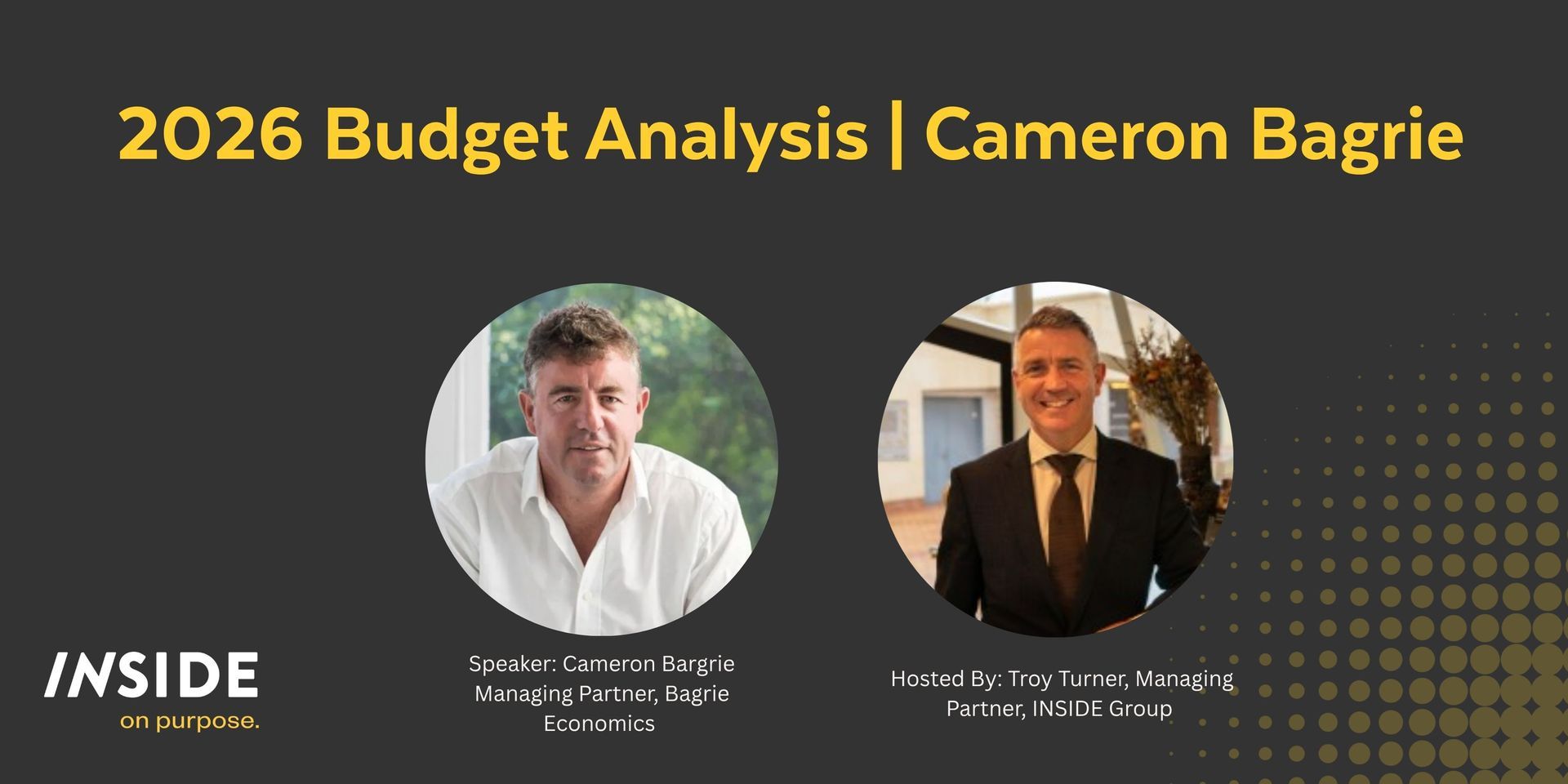
Last week we were joined by Cameron Bargrie, Managing Director and Chief Economist of Bagrie Economics to provide a no nonsense insight into the New Zealand economy following the Budget given by the Finance Minister Nicola Willis. Cameron is no stranger to the NZ Budget, telling us that this is his 29th Treasury lock up. Prior to his current role Cameron was ANZ’s Chief Economist for 11 years, making him a veteran in the New Zealand economy. The following summary is Cameron’s insights, they are generalised in nature and should not be taken as personalised advice. If you would like to inquire about his services, feel free to reach out to him here .

We were privileged to partner with Cameron Bagrie, Chief Economist , to host a webinar on New Zealand’s economic outlook. You can watch the full webinar below:

Post Budget Webinar with IN SIDE and Cameron Bagrie

We wanted to take a moment to share some incredibly exciting news with you...INSIDE has officially welcomed Weirdly into our team!
This decision wasn't just about expanding our business; it was about staying true to our commitment to provide you with exceptional recruitment experiences. Also, challenging economies are when you see industry-shifting ideas come to life. Our dedication to your success remains at the forefront of everything we do, and the acquisition of Weirdly's recruitment software business https://www.getweirdly.com/ is a testament to that.

In today's professional world, effective communication and engagement is a must for success. This need became very apparent during the challenges brought about by the COVID-19 pandemic. As organisations faced unfamiliar situations, communications professionals played a vital role. They skillfully used well-planned strategies to navigate through the uncertainties, providing us with valuable information and direction. Recognising the crucial role of communications experts during uncertain times, it's only natural to think about how to ensure your organisation has the right people to lead it toward successful outcomes. Finding and securing top talent in the field of communications and engagement goes beyond experience and availability. It's about aligning the right professionals with the right opportunities, all driven by a shared purpose. At IN SIDE, we excel in this process, guided by our core values, in-depth industry insights, and an extensive network, ensuring a premium recruitment experience.

New Zealand, with its breathtaking landscapes and vibrant culture, has always been a magnet for dreamers, whether they're locals or intrepid souls from abroad. But, when it comes to job hunting, this land of the Long White Cloud unveils a unique terrain that's both inviting and challenging for anyone seeking their place in the workforce. Let's dive into the heart of the matter. / Market Size and Structure: Picture this: New Zealand, a cozy small-market economy that boasts a plethora of small to medium-sized enterprises (SMEs). These are the unsung heroes, shaping industries from agriculture and tourism to cutting-edge technology and the arts. They're the backbone of our job market, offering a diverse smorgasbord of opportunities. But, here's the kicker – the big players are scarce. Large corporations and multinationals aren't as common as in some other countries. So, if you're dreaming of conquering the corporate world on a grand scale, well, it can be like looking for a needle in a haystack here. And keep in mind there is a lot of people waiting and wanting this opportunity also. / Skilled Workforce: Our secret weapon? An exceptionally educated and skilled workforce. Kiwis take their work and education seriously, and our talents are sought after worldwide. But, when global markets flourish, New Zealand sometimes feels the pinch as our brightest minds venture abroad. So, while you may hear about the influx of talent, you might wonder what our net gain truly is in the grand scheme of things. / Regional Variation: Now, here's where the Kiwi job market adds a dash of spice. It's not a one-size-fits-all situation. Take Auckland and Wellington, bustling cities that offer a buffet of opportunities across various sectors. But venture further, and you'll discover specialised industries like agriculture in the South Island. Oh, and here's a fact few people know: a whopping 33% of all employed folks are in Auckland alone, while Auckland, Wellington, Canterbury, and Waikato combined house 66% of the working population. / Skills Shortages: Just like any other country, we grapple with skills shortages. Healthcare, construction, IT – these are the areas where we could use some extra hands. It's no surprise that employers often look overseas for skilled professionals to bridge these gaps. But let's be honest, as other countries shine brighter on the global stage, luring top talents becomes a bit of a tussle. This may free up a little with the economic conditions changing but not as much as some might think. / Current Landscape: In the current New Zealand recruitment landscape, a notable decline in shorter-term contract positions is evident across the country, with this trend not being offset by an increase in permanent roles. Various sectors are experiencing their unique challenges; the Public Sector is transitioning to a reduced operating model, small to medium businesses are striving to boost sales to counter rising costs, and regional New Zealand is grappling with decreasing dairy payouts. Moreover, the nation as a whole is contending with high inflation and elevated interest rates, which may sound somewhat dire. However, the situation is not entirely bleak, and here's why: New Zealand boasts an impressively low unemployment rate, and globally, there is a shortage of both skilled and unskilled workers. While we anticipate this economic cycle to persist for a while, it's essential to remember that it's a problem for the present, and opportunities will eventually emerge, so stay vigilant. / In Conclusion, what does this mean: For employers, this period may entail lower employee turnover rates and greater difficulty in enticing employees away from competitors. You may also catch wind of potential organisational changes within your industry. If you're an employee, expect to encounter fewer job opportunities and limited mobility. Phrases like "we need to deliver more with less" might become more common. Nevertheless, it's crucial to recognise that this is a temporary challenge. My advice is to remain attentive and align your efforts with your organisation's purpose. Prioritise self-care to operate at your best both at home and work. Now is not the time to overexert yourself; instead, work smart. While the demand for contractors is indeed decreasing, it's unlikely to vanish entirely. Many individuals continue to appreciate the flexibility that contracting offers and may be reluctant to shift to permanent positions. Furthermore, organisations, uncertain about the future, are turning to project-based resourcing models as a way to mitigate long-term risks.
